
Kings World · Gear Guide · 7 min read
Most gym clothes are designed for a photograph. Strength training is a different problem: you need kit that survives a bar on your back, doesn't ride up mid-set, holds its shape after two hundred washes and keeps you warm through a twenty-minute warm-up. Here's what actually matters when you're buying gym wear for strength training — and what's just marketing.
The Short Version
- Judge every piece on four things: freedom at the shoulder, a cut that stays put, fabric that survives repeat washing, and layers you can add and remove.
- Cotton blends for heavy, low-rep days. Performance fabrics for conditioning. A hoodie over the top of either.
- Fitted beats baggy when you're lifting heavy — you can see your own positioning, and nothing catches on the bar.
- Four tops, two bottoms, one hoodie, one bag. Everything past that is preference, not performance.
1What strength training asks of your kit
Running gear is built around one job: move sweat away from the skin as fast as possible. Lifting is more demanding, and in different directions.
A bar sits directly on your traps when you squat. Your shoulder goes through its full range on every overhead press. Warm up in a hoodie. Strip down for the working sets. Rest, lift, repeat. Then wash it all and do it again tomorrow. Zero days off means zero days off for your kit, too.
So the criteria are: freedom at the shoulder, a cut that stays put, fabric that survives repeat washing, and layers you can add and remove without changing outfit. Everything below comes back to those four.
2Tops: t-shirt, vest or stringer?
This is the decision people overthink most, and it comes down to how much coverage you want at the shoulder and armhole.
T-Shirt
- Coverage
- Full shoulder and sleeve
- Best for
- Everything. The default, and the most wearable outside the gym.
- Watch for
- A casual cut with no room across the back
Vest
- Coverage
- Standard armhole, no sleeve
- Best for
- Hot gym floors, and seeing your own positioning clearly
- Watch for
- Armholes cut too low to be wearable
Stringer
- Coverage
- Narrow strap, low armhole
- Best for
- Maximum airflow. Squarely a bodybuilding cut.
- Watch for
- It's a preference, not a performance upgrade
A gym t-shirt is the default and the most versatile. Look for a cut with room across the back and shoulders that still tapers at the waist — that's what separates a training tee from a casual one. Our men's gym t-shirts run classic, muscle and performance fits for exactly this reason, and the women's t-shirt range covers classic, cropped, performance and tank styles.
A training vest removes the sleeve entirely. That helps in two situations: hot gym floors, and any session where you want an unobstructed view of your own positioning. Men's vests and tops are cut wider at the armhole so nothing binds when you press.
A stringer takes it further — narrow strap, low armhole, maximum airflow. It's squarely a bodybuilding cut and it's a preference, not a performance upgrade. Nobody has ever missed a lift because of a sleeve.
3Hoodies: the most underrated piece of lifting kit
If you only upgrade one thing this year, make it your hoodie. A gym hoodie does real work in a strength session: it keeps your muscles warm between sets and through the warm-up, which matters far more in a cold January gym than most people admit.
Buy for weight, not for looks. A cotton-blend hoodie layers well and works year-round. A heavyweight fleece is a winter tool — brilliant in February, unbearable in June. A zip-up gives you the option to shed a layer without pulling anything over your head mid-session, which is why zip styles outsell pullovers among people who actually train in them.
The other thing to check is the shoulder. Plenty of gym hoodies for men are cut so tight through the arm that you can't warm up in them, which defeats the point entirely. Browse men's hoodies or women's hoodies and sweatshirts — the women's range runs from classic through cropped and zip-up to heavyweight fleece.
4Bottoms: joggers, shorts or leggings
For squats and deadlifts, the test is simple: can you sit into a full-depth squat without the fabric fighting you at the hip and knee? If the answer is no, the garment is wrong regardless of what it cost.
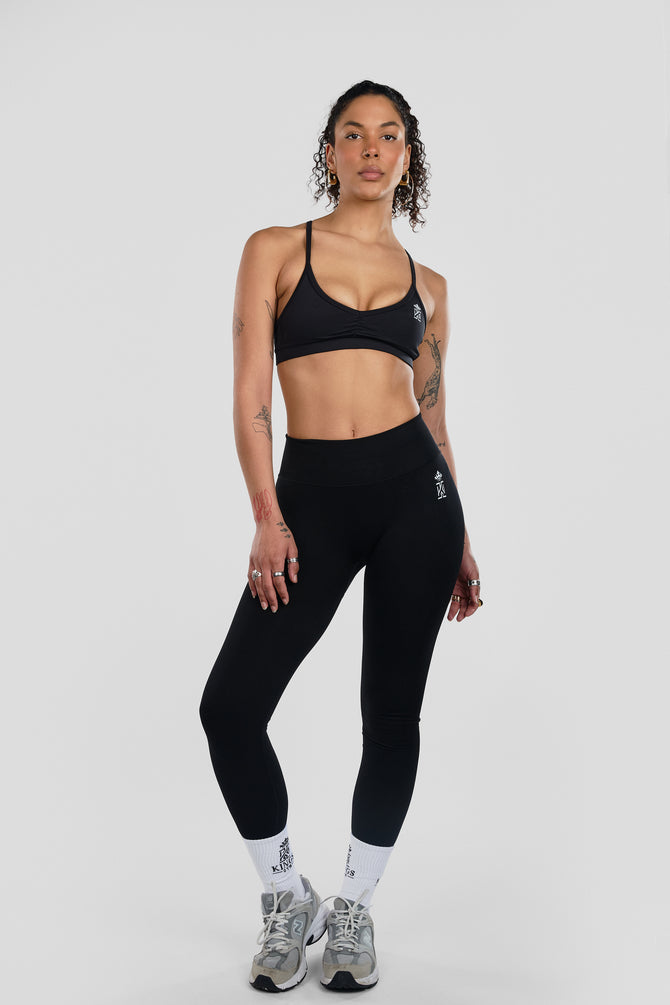
Joggers with a tapered leg keep fabric off the bar path on deadlifts. Shorts want enough length that they don't ride up but not so much that they bunch behind the knee. Leggings need real four-way stretch and a waistband that stays where you put it under a belt — see women's leggings and men's bottoms.
One overlooked detail: pockets. Deep pockets with a zip mean your phone stays put during walking lunges. Shallow open pockets mean it doesn't.
5Fabric: cotton versus performance blends
There's no single winner here, and anyone telling you otherwise is selling something.
Cotton & Blends
Heavy DaysFeels better against the skin, looks better outside the gym and holds structure through the wash.
It also holds sweat — which makes it a poor choice for high-output conditioning.
Best for: heavy, low-rep strength work where you're resting between sets.
Performance Synthetics
ConditioningMoves sweat away from the skin and dries fast, which is exactly what you want when your heart rate stays up.
Less comfortable to sit around in afterwards.
Best for: supersets, circuits and anything sustained.
A sensible wardrobe holds both. Cotton-blend tees for your heavy days, performance fabrics for conditioning, and a hoodie over the top of either.
6Fit: why baggy isn't automatically better
Oversized has been the dominant look for a few years now, and there's nothing wrong with it — but there's a practical argument for a closer fit when you're lifting heavy.
A fitted top lets you see your own positioning in the mirror: whether your shoulders are level, whether your ribs are flared, whether your hips are shooting up first out of a squat. That's genuinely useful feedback, and a baggy tee hides all of it.
It also stays out of the way. Loose fabric catches on knurling, bunches under a belt and drags on the bar during cleans and rows.
The compromise most experienced lifters land on: fitted on heavy days, relaxed on everything else.
Work Hard. Stay Humble.
The Kings Gym Way7The kit that isn't clothing
Two or three accessories do more for a strength session than any garment.
A weight lifting belt gives you something to brace against once you're working near your limit on squats and deadlifts. Lifting straps take grip out of the equation on heavy pulls so your back finishes the set. Wrist wraps stabilise the joint on heavy pressing, and knee wraps add support and rebound out of the bottom of a maximal squat.
None of it is a beginner purchase. Learn the movement first, add the equipment when bracing or grip becomes the limiting factor rather than the muscle. And a decent gym bag that holds shoes, a towel and a shaker without collapsing is worth more than most people budget for it.
8What to actually buy: a working rotation
If you train four times a week and wash twice, this covers it without over-buying:
The Four-Day Rotation
4 Tops
Two cotton-blend tees for heavy days, one performance tee for conditioning, one vest for summer.
2 Bottoms
One joggers, one shorts or leggings. Both need to pass the full-depth squat test.
1 Hoodie
Weight chosen for your climate and how well your gym is heated.
1 Bag
Holds shoes, a towel and a shaker without the shape collapsing.
Add a belt and straps when the weights justify them. That's it — everything beyond it is preference, not performance. Start from the men's range or the women's range, and check new in for the latest drops.
9Making it last
Gym kit dies from washing, not training. Four rules cover almost all of it:
1 Wash Cold
Heat is what breaks down elastane and warps the fit.
2 No Softener
It coats the fibres and kills moisture-wicking outright.
3 Dry Low
Tumble on low, or air dry. High heat shrinks and cracks prints.
4 Inside Out
Turn garments before ironing so prints and logos survive.
Do that and a good tee lasts years rather than months, which changes the maths on paying a bit more up front.
10Why Kings Gym makes its own kit
We run strength and conditioning gyms across London and the South East — Croydon, Mitcham, Crawley, Brighton and Tower Bridge, with Chessington opening soon. Everything in the Kings Gym store gets worn on our own gym floors before it goes on sale, by people training seriously, several times a week.
That's the whole design brief: kit that works for lifters, made by a gym rather than a fashion label. You'll find the full range in store at every club, alongside on-site supplements and the accessories range.
Shop The Range
FAQs: Gym clothes for strength training
What should I wear for strength training?
A top with room across the back and shoulders that still tapers at the waist, bottoms you can squat to full depth in, and a hoodie to keep your muscles warm between sets. Cotton blends suit heavy, low-rep work where you rest between sets; performance fabrics suit conditioning and circuits.
Are gym hoodies actually useful for training, or just for the walk in?
Genuinely useful. Keeping your muscles warm through your warm-up and between heavy sets matters, particularly in cold months. Choose the weight for the job — cotton blends for year-round layering, heavyweight fleece for winter — and check the shoulder isn't cut so tight you can't warm up in it.
Is baggy or fitted gym wear better for lifting?
Fitted has a practical edge on heavy days: you can see your own positioning in the mirror, and loose fabric won't catch on knurling or bunch under a belt. Relaxed fits are more comfortable for everything else. Most experienced lifters own both and switch depending on the session.
What's the difference between a gym vest and a stringer?
A vest has a standard armhole and full shoulder coverage, making it the more wearable of the two. A stringer uses a narrow strap and a low armhole for maximum airflow and freedom of movement, which is squarely a bodybuilding cut. Both work — it's a coverage preference, not a performance difference.
How do I stop gym clothes wearing out so fast?
Wash cold, skip the fabric softener — it coats the fibres and reduces moisture-wicking — and tumble dry low or air dry. Turn garments inside out before ironing so prints and logos stay intact. Kit usually dies from washing rather than training.
Do I need a lifting belt and straps as a beginner?
Not at first. Support kit helps once bracing or grip becomes your limiting factor rather than the muscle — usually when you're working at or above roughly 80% of your maximum on squats, deadlifts and heavy pulls. Before that, learning the movement matters more than the equipment.
Earn Your Crown
Ready to kit up?
Shop the men's and women's ranges, or come and try it on at your nearest club before you buy. Earn your crown at Kings Gym.
Our clubs: Tower Bridge Croydon Mitcham Crawley Brighton